Greetings
The particularTimepiece’s Heart Activity attribute has transformed how diverse users observe their heart health. This summary explores into the system of the ECG application on the Smartwatch, describing how it processes and what sort of metrics it can give. We’ll highlight the essentials of ECGs, conceivable limitations, and essential issues to ensure in regard before depending the conclusions. Ultimately, this publication aims to assist you to know your cardiovascular’s rhythm with the cooperation of your Watch
Knowing ECG+ through Your Apple Watch
The Digital watch provides an outstanding component, the ECG+ application, facilitating you to acquire an electrocardiogram directly from your wrist. This device isn't a proxy for regular medical consultations, but it offers valuable knowledge about your heart cadence. The ECG+ app recognizes atrial fibrillation (AFib), a type of irregular heartbeat, and can indicate other heart disorders. To implement it, ensure your watch and iPhone are compatible. You’ll required watchOS 7.5 or subsequent and iOS 14 or advanced on your iPhone. The process demands placing your fingers on the Digital Crown and second area below it, waiting the watch finish the reading. Results are recorded in the Health app and can be transferred with your clinician.
- Validate proper watch positioning.
- Keep to on-screen instructions.
- Discuss results with a medical professional.
Insights Into Apple Watch ECG Reader
The The smartwatch’s ECG function uses an innovative approach to capture your cardiovascular electrical discharges. It runs by applying electrical detectors located within the turn wheel and the bracelet. When you initiate an ECG measurement, these parts send minuscule electrical impulses through your arm, which followingly register the electrical signatures of your cardiac cycle. These readings are analyzed by specialized protocols within the instrument to compile an ECG result, which can then be accessed within the wellness program on your smartphone. Concerning accuracy, while the Apple Watch ECG reader can contribute valuable facts, it is not designed as a equivalent for a comprehensive ECG performed by a trained clinician. Analyses have shown different levels of agreement with diagnostic ECGs, highlighting the value for evaluation by a doctor and it is expected to be used as a means for checking purposes, not for medical verdict of cardiovascular conditions.
Understanding the this timepiece ECG Utility
A Apple Watch's ECG software can seem complicated, but learning how it behaves is surprisingly simple. It’s significant to understand that this application isn't built to substitute a licensed practitioner’s evaluation; instead, it supplies a snapshot of your coronary electrical rhythm. At heart, the watch employs electrodes installed in the crown and display to track the pulse signals. The mechanism can reveal potential abnormalities like atrial arrhythmia, which implicates prompt medical assessment.
- It's a preliminary mechanism.
- Always consult a licensed.
- Recognize the drawbacks.
Cardiac Screening on Apple Watch: Deciphering Your Coronary Readings
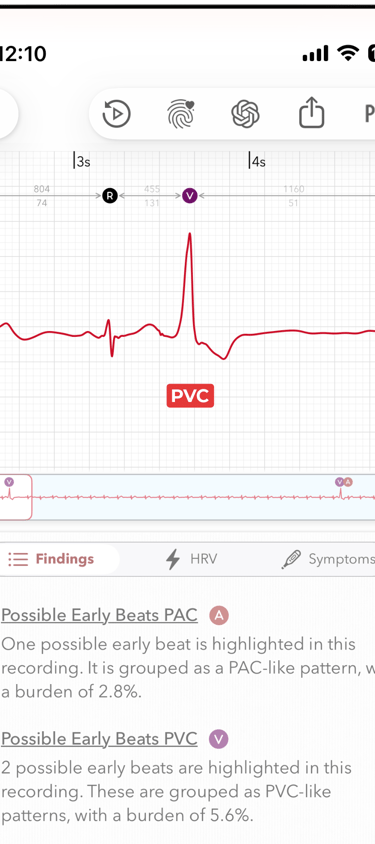
Such a Apple Watch's ECG capability offers a exceptional glimpse into your heart's beat pattern. That said, it's crucial to understand that these outputs aren't a replacement for a qualified diagnosis. An ECG has the capacity to detect problems like atrial fibrillation (AFib), which is a type where your circulatory beats irregularly phased. Other findings could include steadystate rhythm, or exceptional patterns that support additional investigation by a expert clinician. Regularly share your ECG data with your healthcare provider for correct assessment and bespoke input.
Might Your Apple Watch Electrical Activity Giving Precise Results?
The emerging Apple Watch ECG feature furnishes a tempting glimpse into your cardiopulmonary health, but a question lingers: are they truly giving accurate information? While the Apple Watch ECG is ecg app for apple watch certified by the FDA, it's essential to acknowledge it's not a proxy for a professional hospital evaluation. It’s designed to recognize potential electrical irregularities, which can be a need for further investigation, but false positives and false misses are conceivable. Several things, including proper positioning of the watch and body contact, matter in obtaining meaningful results. Consider consulting with your doctor regarding your ECG results and never self-diagnose the Apple Watch's assessment.
- Ensure proper watch wearing.
- Exchange results with your clinical team.
- Steer clear of self-treating based on ECG outputs.
Apple Watch ECG & ECG+: Properties and Pros Contrasted
This Watch offers an modern ECG and ECG+ application, supplying users to obtain a electrocardiogram directly from their digit. The primary ECG platform can recognize signs of AFib, a potentially important heart abnormality. ECG+ extends upon this, offering a amplified 30-second recording interval and extra analysis focused on highlighting port-side ventricular areas, the ones that might be relevant for certain patients with such record of cryptogenic hemorrhagic episode. These attributes represent a substantial improvement in wearable clinical tracking technology, hypothetically facilitating for advanced therapy and improved subject effects.
Handling Usual Concerns with a Apple Watch ECG
If your Apple Watch ECG application isn't working according to plan, many viable causes are and can be comparatively addressed. At the start, guarantee that watch and your iPhone are updated with the current software. Next, experiment with reinitializing both units; a minimal reboot frequently eliminates light glitches. In addition, assess the ECG settings in the Health software to guarantee everything needed parameters exist as configured accurately. At last, if someone is still experiencing issues, communicate with Apple Support for extra direction.
Transcending the Fundamentals: In-depth Apple Watch ECG Understanding
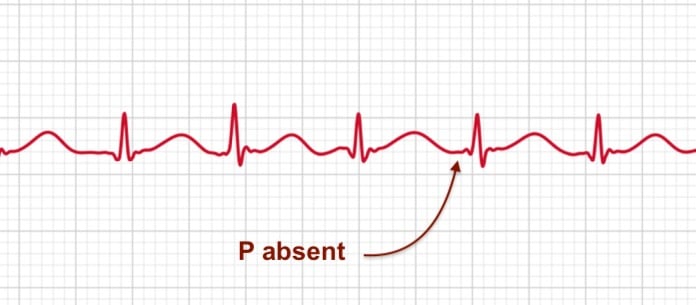
While the Apple Watch’s ECG feature offers a valuable tool for locating potential atrial fibrillation, scrutinizing outside of the preliminary assessment discloses a field of refined possibilities. Meticulous observation of the full waveform, including traits like P wave form, PR timespan, and QRS unit, necessitates a greater knowledge of cardiac operation. Furthermore, exploring trends over span and juxtaposing ECG readings with individual experience can furnish key insights for more diagnostic examination, whereas it's essential to be aware of that the Apple Watch ECG is is not meant to be a surrogate for a competent cardiac appraisal.
Until next time