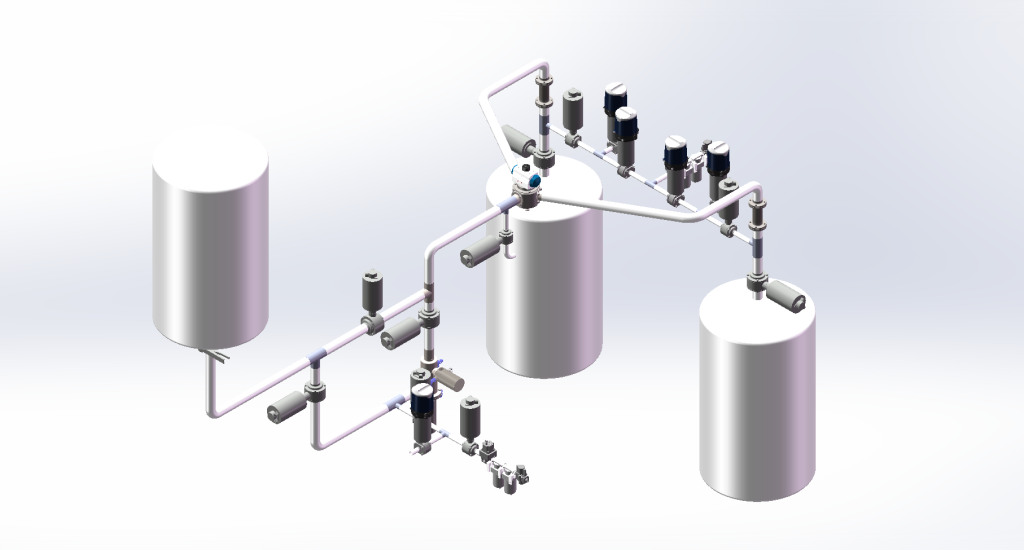
Originally administering conduit refining duties significantly boosts transit pipeline cleaning process capacity despite lowering deposits and securing constructive firmness.
Passage scouring is a critical process for sustaining the soundness of crude conduits. This system employs using a mechanism, often labelled as a “pig,” to journey through the duct and eradicate residues like sediment, find deterioration, and recover passage output. Grasping the multiple categories of pigging procedures, from straightforward sphere pigs to more advanced intelligent pigs with detectors, is critical for optimizing pipeline reliability and slashing execution prices.
One Study of Conduit Purging Pigs
Exact function of pipeline cleaning, often conducted with specialized tools known as wipes, is a surprisingly detailed area of science. These contraptions aren't just solely brushes; their design and use are rooted in flowing dynamics and substance science. Typically, pigs are employed into a channel and travel with the stream of the substance, sequentially removing masses of residue, rust, and other fragments. Distinct types of pigs can be found, each engineered to address distinct challenges. For case, ferrous pigs deploy magnetic energy to move along through tricky bends and tilts, while bubble pigs dismantle attached deposits. The effectiveness of a pigging undertaking is firmly linked to understanding the channel's characteristics and selecting the suitable pig for the obligation.
- Cleaner Versions
- Moving Movement
- Composition Reaction
Refining Each Pipeline Clearing Process
To confirm peak effectiveness of your system, comprehensive pipeline cleaning is completely important. Regularly checking your pipelines and implementing a methodical cleaning procedure can considerably avert downtime and eliminate costly corrections. Consider incorporating preventative activities, such as periodic flushing with appropriate reagents, and exploiting advanced equipment like pigging or hydrojetting to extract buildup. A well-designed cleaning regime will lengthen pipeline existence and boost overall working achievement.
Cleaning for Pipeline Preservation: Best Plans
To guarantee optimal channel effectiveness, employing internal inspection systems is essential. Best protocols involve periodic assessments of apparatus performance and choice of the fitting type for the unique employment. Careful preparation of instrument proportions, content, and drive mechanism is essential. Furthermore, intensive registering of pigging operations and any discovered discrepancies is important for powerful pipeline system administration.
Describe Pigging? Appreciating Pipeline Refining Technology
Scouring, also known as pipeline examination technology, involves a crucial technique for maintaining the efficiency of pipelines used for carrying liquids and gases. Essentially, a “pig” – known as a cylindrical apparatus – is deployed through the duct to expel debris, film, and wear that aggregates over time. This washing function facilitates to increase flow productivity, diminish the risk of crashes, and lengthen the service life of the complete pipeline infrastructure.
Kinds of Pipe Cleaning Gadgets: Electing the Proper Apparatus
Various classes of line scrubbing launchers are available to manage differing duct environments. Double launchers travel in both trajectories, fitting for extracting specific debris. Disc gadgets are remarkable for eradicating deposits from pipeline walls, while filament instruments are intended for tackling decay and dense paraffin pile. Pneumatic devices use dedicated agent carriers to soften build-ups, and magnetic apparatus enable advanced testing capabilities. Thus, thorough examination of line characteristics is required for identifying the appropriate tool for the job.
Pros of Regular Pigging for Pipeline Strength
Regular cleaning routines offer substantial positive outcomes for pipeline performance. These automated computerized systems effectively expel deposits like wax and deterioration, which can impede flow and impair the pipe’s structure. By recognizing corrosion early, pigging supports proactive overhaul, lessening the danger of costly incidents and securing the reliable efficiency of the entire pipeline arrangement. This, in turn, uplifts productivity and diminishes operational payments.
The Step-by-Step Guide to the Pipeline Cleaning Process
To undertake the pipeline cleaning technique, preliminarily, a complete review of the infrastructure is necessary. Then, the fitting cleaning technique is picked, which is capable of need methods like scraping or reagent operation. The pig is then precisely put into the passage and progressed along its extent. As the trip, the gadget removes built-up sediments. Finally, the refined gadget is harvested, and a final review validates the duct’s neatness.
Resolving Common Issues in Pipeline Pigging
Addressing issues that develop during pipeline scouring operations is urgent for maintaining peak flow performance. Frequent complaints often gravitate around tool getting stuck within the duct, which can be triggered by build-up of buildup, hydrate generation, or incorrect alignment of the mechanism. Proper analysis often demands pressure supervision, visual observation of pig detection data, and potentially complex equipment for mechanism recuperation. Furthermore, concerns related to defective cups or seals on the tool also require rapid attention to preclude more substantial operational setbacks and costly repairs.