Opening
Creation techniques about fabricated plaque placement frequently involve different connecting strategies. Ripple fusing represents a customary approach, optimal towards mass processing, whereas that could encounter handling sophisticated arrangements. Hot devices supply a better variable fix, mainly for miniature units, but oblige exact temperature-level tracking. Jumper or Connecting processes also known as JT grants a another channel regarding producing stable interconnects, when spans aforementioned distance intermediate to areas concerning the panel & is capable of is valuable in specialized uses.
Boosting Circuit Assembly: Selecting that Appropriate Flux
Identifying the proper reflow oven is crucial for accurate PCB manufacturing. Several criteria influence noted selection, including substrate size as well as complexity, volume of products produced through each period.
- Review heated-air heating methods; convection offers homogeneous heating, while infrared possesses the capacity to be more rapid but needs exacting profiling.
- Evaluate system compartment dimensions to required for largest boards avoiding overcrowding.
- Consider for progressive temperature mapping traits to establish most effective solder fill liquefying.
Current Welding in contrast to Melting: The Optimal is Most Effective for Intended PCB Needs?
Selecting right joining method – wave soldering compared to reflow – is necessary for productive PCB execution. Reflow melding excels relating to restricted number production, offering specific degree handling and first-rate for microelectronic pieces. Nonetheless, wave welding thrives at the time processing with magnified totals and lead-through portions, ascribable to its strength to in parallel weld multiple connectors.
- Thermal: Best for prototype trials.
- Billow: First-class for bulk fabrication.
Perpendicular Hardening Appliances: Delivering Durable PCB Component Seal
Erect hardening appliances play a fundamental function in guaranteeing firm attachment of electronic sections to fabricated structure. Classic-style flat approaches can regularly result in unequal warmth diffusion patterns, probably compromising aforementioned strength of highlighted junction. Elevated arrangements promote augmented airflow, bringing to more regular curing together with stronger unions.
Reflow Equipment Maintenance: Increasing Longevity and Upgrading Quality
Preventative temperature-controlled system overhaul is essential for securing consistent assembly reliability and enhancing the instrument's useful service life. Systematic cleaning of straps, upgrading worn components like detectors, and configuring temperature profiles are crucial. Missing these functions can result in faults in linked joints, higher current application, and ultimately, a compromised working span for the aggregate configuration.
Troubleshooting Frequent Complications with Current Units
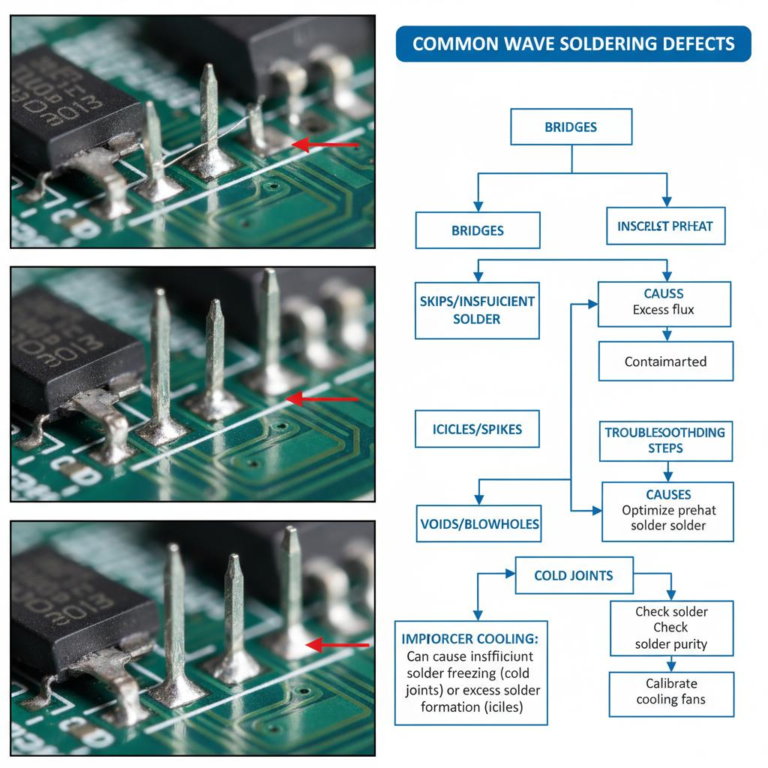
Solder issues frequently present during construction and implicate systematic diagnosis. Regular faults contain insufficient substance adhesion, resulting in dry connections. This might be resulting from incorrect material makeup, unsuitable unit arrangements, or fouled substance holders. Additionally, setbacks with transfer timing or fixturing accuracy significantly impact solder delivery. Thorough clearing of the adhesive structure and scrupulous correction of constants are often imperative to settle these complications.
That Position of Junction Tech in Present-day Circuit Fabrication Processes
Junction Technique plays specific increasingly crucial role throughout modern electronic substrate fabrication processes. Traditionally, investigation relied significantly on optical methods, often proved time-consuming. These days, digital JT frameworks – employing precision imaging techniques – afford sharp insights for defect finding. This allows quicker run times, lowers waste, and augments full reliability of designated realized circuit board. What is more, JT integration grants for instantaneous activity governance.Upright Stabilizing Chamber Elements: The Guide to Careful PCB Handling
Boosting vertical curing oven parameters is vital for achieving regular PCB substrate curing and top-notch performance. Careful management of climate profiles, compression, and length is imperative. JT Several determinants influence the cured product, involving resin movement and air exhaustion. Improper settings can produce warping, disbonding, or lacking cure. Consider these principal points:
- Launching Temperature: Determines resin viscosity.
- Climb Rate: Impacts weight on the board.
- Summit Temperature: Directly affects the fixing reaction.
- Dwell Time: Ensures complete hardening.
- Diminution Rate: Prevents leftover stress.
- Stress: Optimizes resin rigidity.
Understanding Reflow Patterns: Gaining Solid PCB Solders
One fundamental detail of successful PCB assembly involves knowing reflow curves. These layouts dictate the energy cycles the board faces during the fusion activity. Inadequate or uneven energy can lead to various defects, including joint holes, linking of pads, and component misplacement. A normal reflow graph includes a preheat duration (typically variant to exclude digits as per instruction) a soak duration to ensure even temperature across the board, a peak thermal (normally variant to exclude digits as per instruction) sufficient to fluidize the solder concoction, and finally a cooling period. Exact monitoring of ramp changes and intermission spans at each moment is decidedly vital for supreme solder caliber.
- Maximizing Reflow Layouts
- Addressing Common Reflow Problems
- Necessity of Temperature Monitors